
The Creative Stages of Pablo Picasso
Pablo Picasso, one of the most influential and revolutionary artists of the 20th century, was a master of creativity. His work spanned multiple styles and movements, and he constantly pushed boundaries to redefine art. Picasso’s creative journey can be divided into several distinct stages, each marked by unique influences, techniques, and themes. From his early years in Spain to his later years in France, Picasso’s creativity evolved and transformed, leaving an enduring legacy on the art world. In this article, we will explore the creative stages of Picasso, shedding light on the various periods that defined his artistic career.
I. Introduction to Pablo Picasso
Pablo Picasso was born on October 25, 1881, in Malaga, Spain. From a young age, he showed an exceptional talent for drawing and painting. His father, an art professor, recognized his son’s potential and provided him with formal training. By the age of 13, Picasso had completed his first major painting, «First Communion.» His early years in art school and exposure to the works of Spanish masters such as El Greco and Velazquez provided a strong foundation for his artistic development.
II. The Blue Period (1901-1904)
The Blue Period marked a significant shift in Picasso’s work, characterized by a somber and melancholic tone. During this phase, Picasso’s palette was dominated by shades of blue and green, reflecting a sense of sadness and despair. The subjects of his paintings often depicted beggars, prostitutes, and other marginalized individuals, capturing the harsh realities of poverty and loneliness. «The Old Guitarist» and «The Tragedy» are among the notable works from this period, showcasing Picasso’s ability to convey emotional depth through color and form.
III. The Rose Period (1904-1906)
Following the Blue Period, Picasso transitioned into the Rose Period, which saw a shift towards warmer and brighter colors. This phase was influenced by his relationship with Fernande Olivier, a model and muse who inspired a more joyful and romantic approach to his art. The Rose Period featured themes of circus performers, acrobats, and harlequins, capturing a sense of whimsy and playfulness. «Boy with a Pipe» and «The Acrobat» are exemplary works from this period, showcasing Picasso’s ability to capture movement and vitality in his subjects.
IV. Cubism (1907-1917)
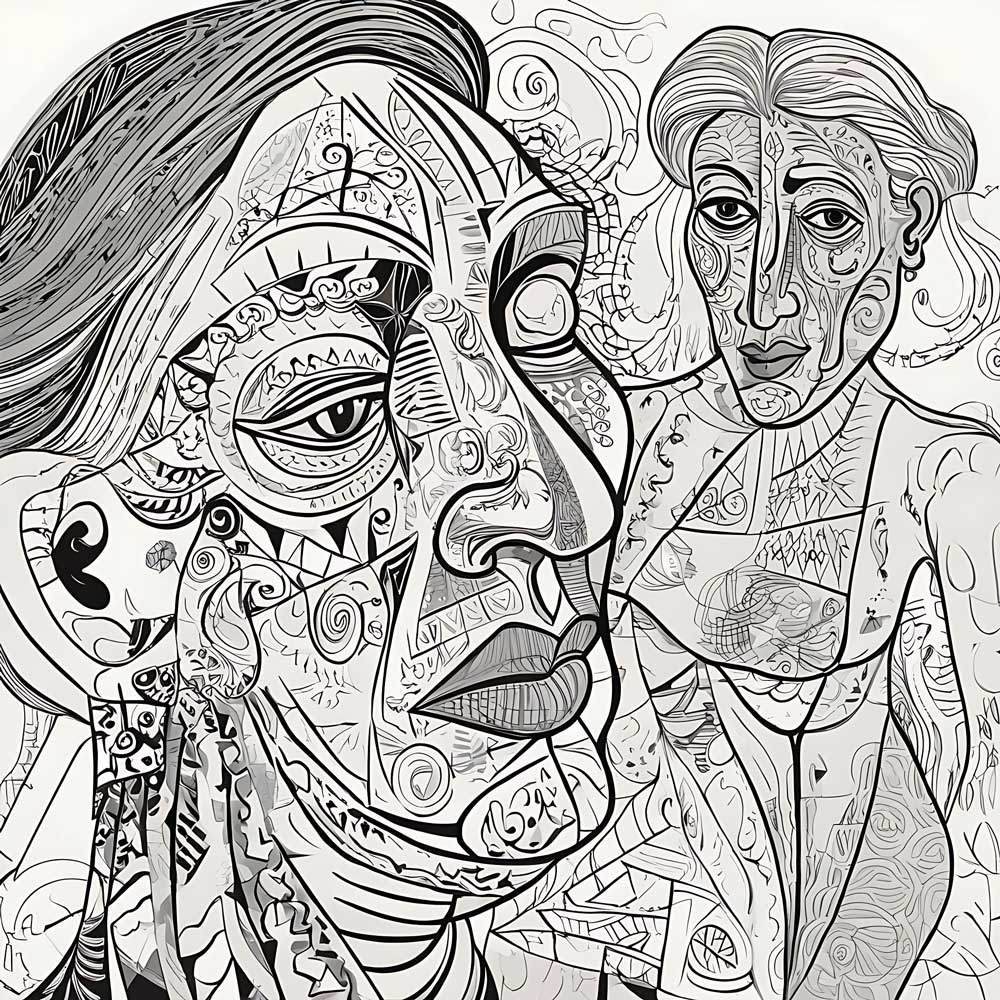
Cubism represented a revolutionary departure from traditional art forms, as Picasso and Georges Braque co-founded this movement. Cubist works depicted subjects from multiple viewpoints, deconstructing form and space into geometric shapes and fragmented planes. Picasso’s «Les Demoiselles d’Avignon» is a seminal piece of this period, featuring angular and distorted figures influenced by African art and ancient Iberian sculpture. Cubism challenged the conventions of representation, paving the way for abstraction and conceptual art in the years to come.
Cuadros Decorativos
V. Neoclassicism (1920-1930)
During the 1920s, Picasso embraced a return to classical form and structure, drawing inspiration from ancient Greek and Roman art. This period, known as Neoclassicism, represented a departure from the innovative and fragmented style of Cubism. Picasso’s compositions became more harmonious and balanced, as seen in works such as «Three Musicians» and «The Pipes of Pan.» Neoclassicism demonstrated Picasso’s ability to adapt and evolve, showcasing a mastery of diverse artistic styles.
VI. Surrealism (1930s-1940s)
In the 1930s, Picasso’s work took a surreal turn, influenced by the burgeoning Surrealist movement. His paintings during this period featured dreamlike imagery, distorted figures, and fantastical landscapes. «The Weeping Woman» and «Guernica» are powerful examples of his surrealist work, capturing the horrors of war and the human psyche. Picasso’s embrace of Surrealism showcased his ability to tap into the subconscious and explore the depths of the human experience through art.
VII. Later Years and Legacy
In his later years, Picasso continued to push artistic boundaries, experimenting with sculpture, ceramics, and printmaking. His innovative spirit and relentless drive for creativity defined his legacy as one of the most influential artists in history. Picasso’s impact on modern art cannot be overstated, as his work continues to inspire and challenge artists to this day. His willingness to explore new techniques and ideas serves as a testament to the power of creativity and innovation in the arts.
FAQs about Pablo Picasso
Q: What are some key events in Pablo Picasso’s life?
A: Some key events in Picasso’s life include his prolific output as a child prodigy, his early success with the Blue and Rose Periods, his co-founding of Cubism with Georges Braque, and his later exploration of Surrealism and Neoclassicism.
Q: What influenced Picasso’s creative evolution?
A: Picasso’s creative evolution was influenced by a variety of factors, including personal relationships, social and political events, and exposure to different artistic movements and cultures. His ability to adapt and innovate was fueled by a relentless curiosity and passion for artistic exploration.
Q: What is Picasso’s lasting impact on the art world?
A: Picasso’s lasting impact on the art world is evident in his diverse body of work and his role in shaping modern art movements. His influence can be seen in the work of countless artists who continue to draw inspiration from his innovative approach to creativity and representation.
Q: How did Picasso’s creative stages reflect his personal experiences and worldview?
A: Picasso’s creative stages reflected his personal experiences and worldview through his exploration of diverse themes and styles. His art served as a reflection of his inner emotions, societal commentary, and a search for new forms of expression.
In conclusion, Pablo Picasso’s creative stages represent a remarkable journey of artistic exploration and innovation. From his early years in Spain to his later years in France, Picasso’s work evolved and transformed, leaving an enduring legacy on the art world. His ability to adapt and innovate across various styles and movements showcases the power of creativity and the enduring impact of his work. Picasso’s legacy continues to inspire and challenge artists to this day, serving as a testament to the enduring power of artistic expression.